Abstract
Background: Ibogaine is a psychoactive alkaloid with therapeutic potential which may promote neuroplasticity. Its effects on human brain morphometry are unknown.
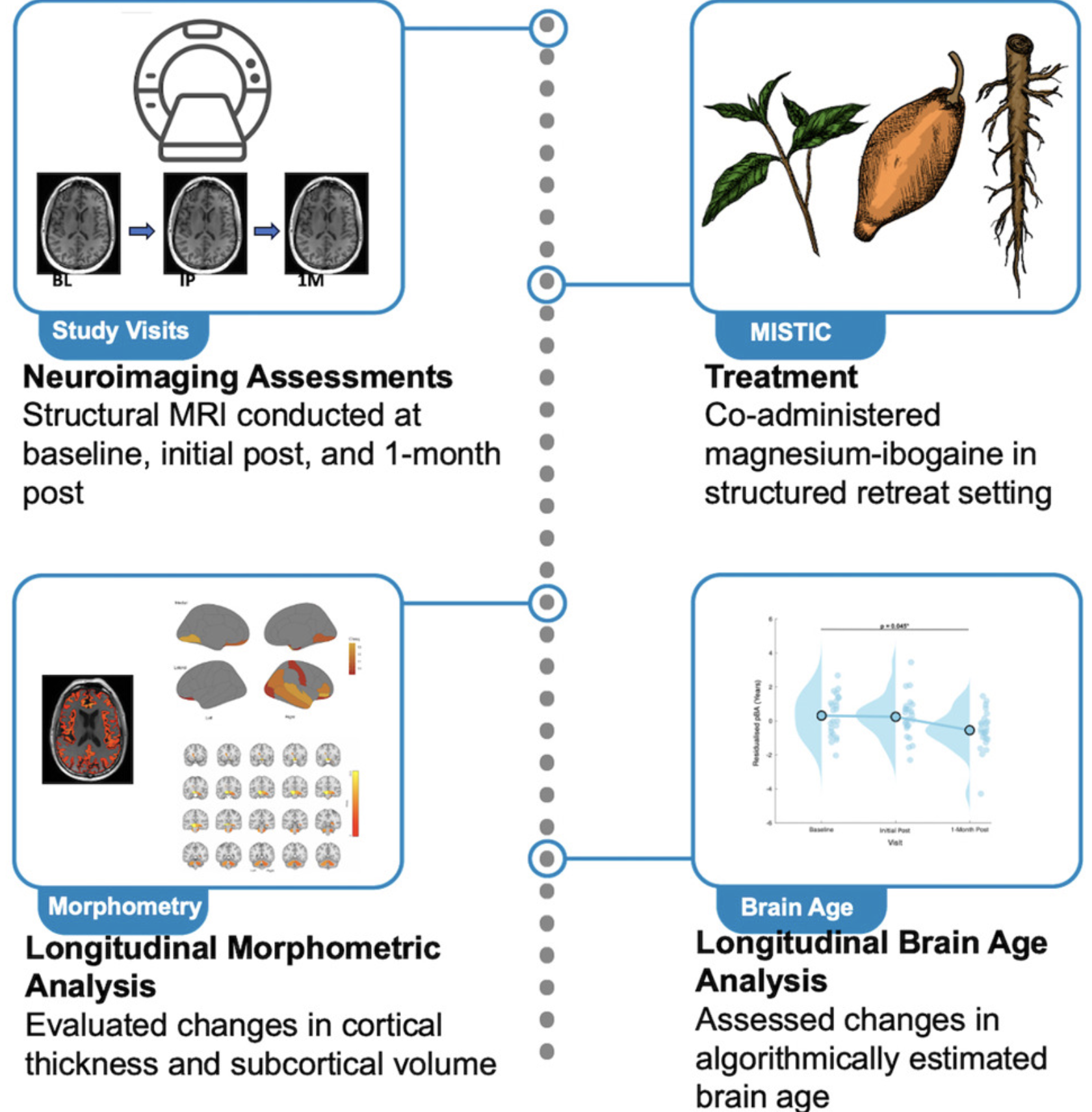
Methods: Thirty Special Operations Forces veterans with prior blast-induced TBI participated in an observational study in which they received ibogaine co-administered with magnesium. Structural MRIs were collected at baseline (n=25), initial post-treatment (n=25), and 1-month post (n=22). Longitudinal analyses assessed cortical thickness, subcortical volume, and predicted brain age (pBA); estimated from T1 scans.
Results: pBA was significantly reduced at 1 month relative to baseline (−1.3 years). Cortical thickness analysis revealed post-treatment increases in 11 regions. Subcortical analyses revealed significant volumetric expansion in 8 regions.
Conclusion: Magnesium-ibogaine therapy was associated with increased cortical thickness, subcortical expansion, and reduced pBA at 1 month. Although T1s are sensitive to nonstructural changes, the overall direction of effect is consistent with neuroplastic change.