Abstract
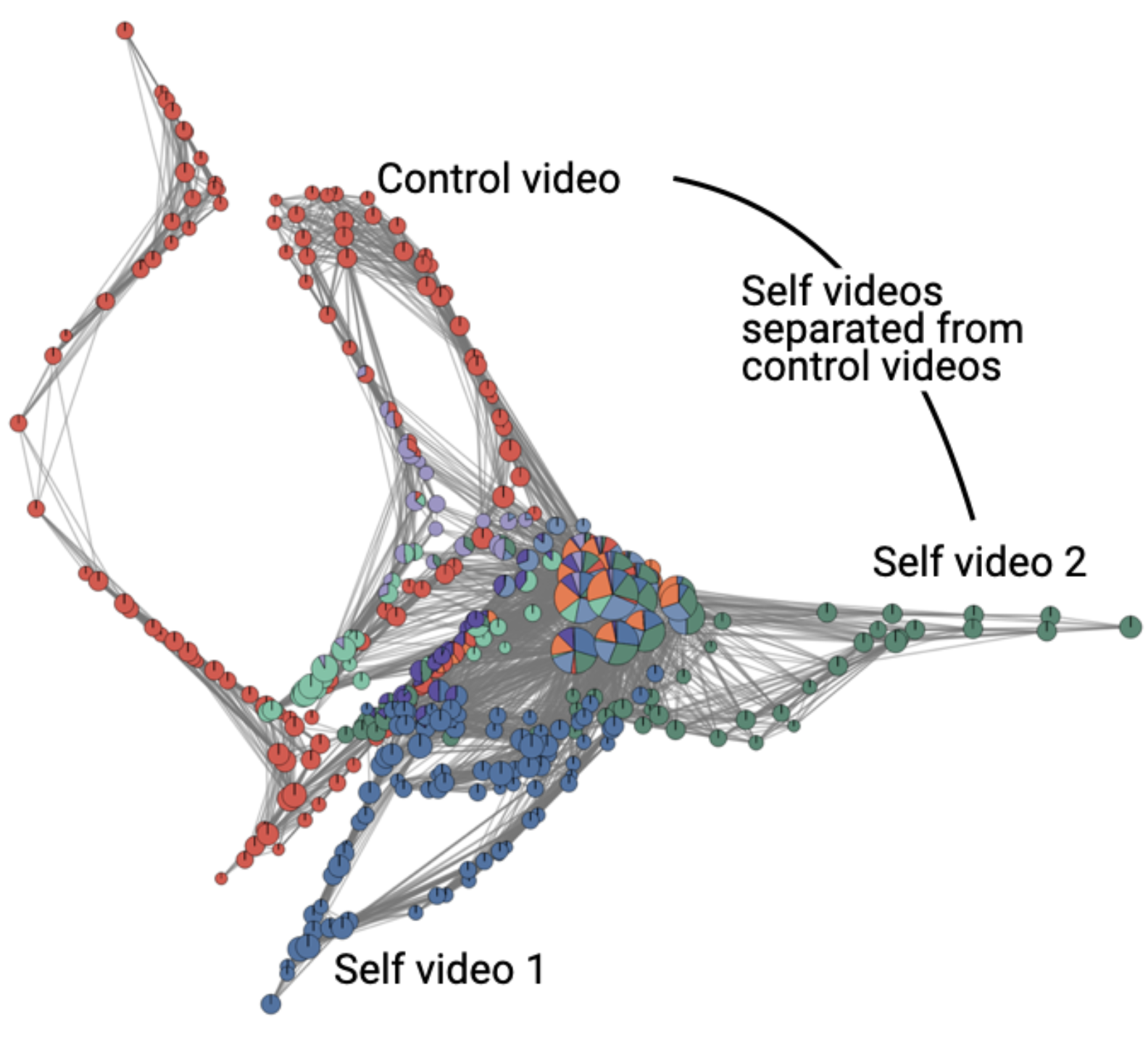
Rumination — repetitive, negatively valenced, self-focused thought — is a maladaptive cognitive style linked to emotional dysregulation and psychiatric risk. To investigate its neural underpinnings in a naturalistic context, we developed an fMRI paradigm in which participants observed and reflected on videos of their own past group-based problem-solving sessions, a naturalistic self-relevant context rarely examined in fMRI studies. Thirty-two adults were recorded during collaborative design-thinking tasks in triads. In a subsequent scanning session, each participant viewed two self-relevant team videos and one control team video, followed by a structured reflection period. We assessed trait rumination using the Rumination Reflection Questionnaire (RRQ) and applied Topological Data Analysis (TDA) via the Mapper algorithm to model individual-level whole-brain dynamics during the task. Mapper shape graphs captured temporal transitions between brain states, allowing us to quantify the similarity of timepoints across the session. Individuals with higher trait rumination showed significantly higher temporal similarity, indicating reduced brain-state variability, during self-relevant conditions (r = 0.46, p = 0.018). This effect was not observed during the control condition. These findings suggest that rumination is associated with rigid brain dynamics during self-observation and evaluative processing. Traditional GLM and inter-subject correlation (ISC) analyses confirmed task engagement of key self-referential and social-evaluative regions, while Mapper revealed dynamic features not captured by static or group-averaged methods. Together, these findings demonstrate that trait rumination is associated with rigid large-scale brain dynamics during self-relevant cognition and highlight the value of combining naturalistic paradigms with topological approaches to capture behaviorally meaningful signatures.